
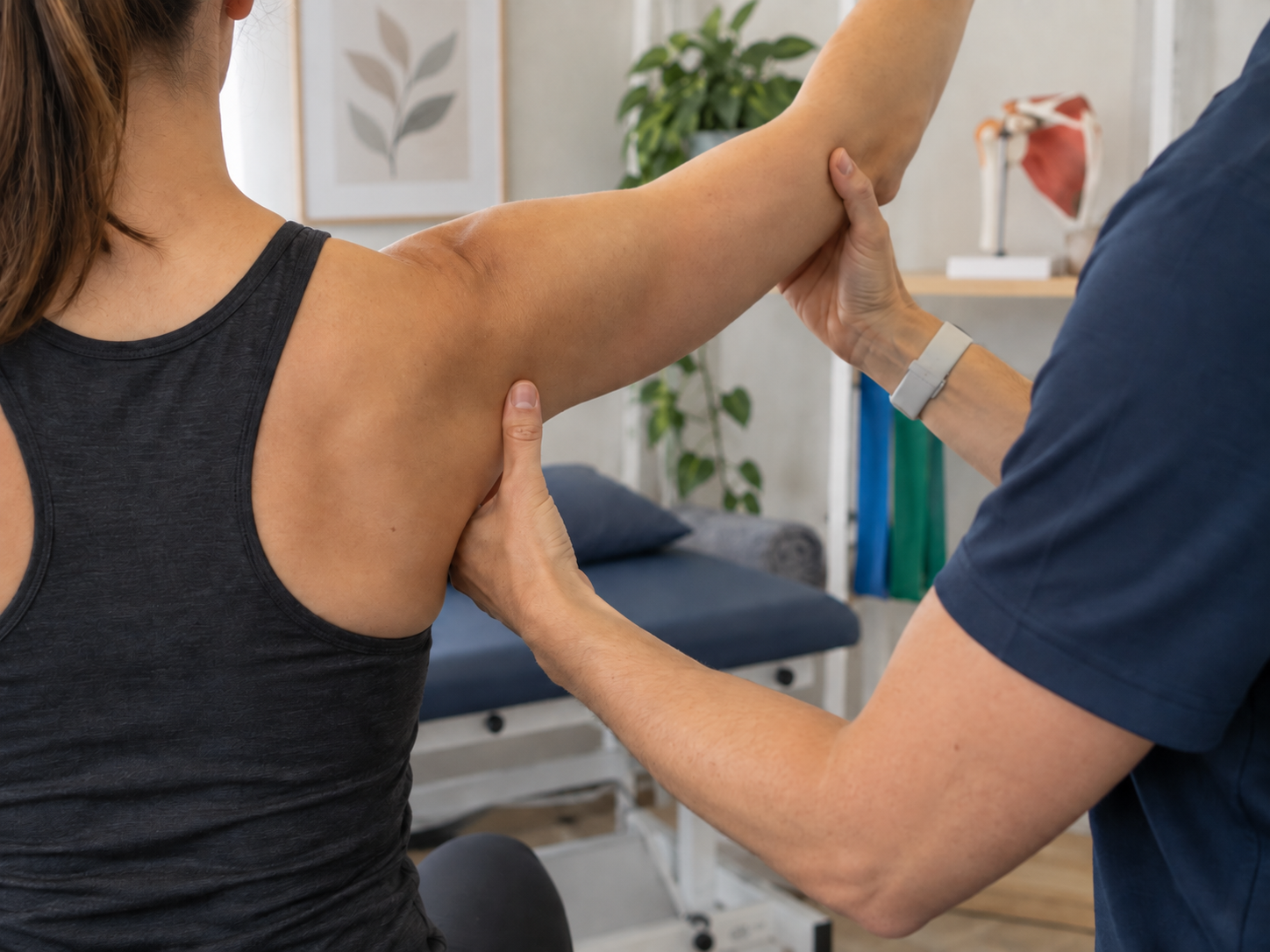
I think I’ve got a rotator cuff injury! What does that mean, and what can I do to help?
The rotator cuff is a group of 4 muscles deep in your shoulder that stabilise it, literally keeping the ball in the socket. Injuries can happen suddenly by lifting something heavy, or throwing something suddenly, or gradually through repetitive strain. It is a more common injury in those over 40.
What is an injury to the rotator cuff?
- A strain of the tendons or muscles caused by over-stretching it
- Tendonitis – overuse and repetitive work
- Tear or rupture; this can be partial or a complete tear – they often need surgery.
How do I know if I’ve got it?
The best way is to see your physiotherapist, who can examine your shoulder thoroughly and make a diagnosis. Symptoms vary, but common ones include:
- Pain on the top or outside of your shoulder.
- Pain on lying on your shoulder – it may keep you awake at night.
- Weakness – difficulty lifting your arm
- Pain on lifting even light things like a kettle.
If you can’t lift your arm at all, especially if it’s a sudden injury, seek urgent medical attention – you may have a complete tear.
What can I do to help my rotator cuff injury?
- Keep it moving – pendular exercises are good
- Apply ice to help with the pain
- Avoid heavy lifting or sudden movements – eg throwing or racquet sports
- See a physiotherapist
Can physiotherapy help?
Yes! Physiotherapy can help by thoroughly examining the shoulder and diagnosing the exact problem -shoulders are complex joints. Your physiotherapist can then:
- Gently mobilise the joint
- Use ultrasound to aid recovery
- Use taping to support and aid recovery
- Provide a detailed personalised rehabilitation programme.
- Refer on to a surgeon if necessary.
How long will it take to get better?
Of course, this varies depending on the severity of the injury and the age of the patient, but roughly:
- A mild strain 2 – 4 weeks
- Tendonitis 6 – 12 weeks
- Tear or full tear – may need surgery and lots of rehab – possibly up to a year.